
One AI Provider, Big Risk For Malaysia’s GEO And AEO Plans
Updated on: 29 June 2026
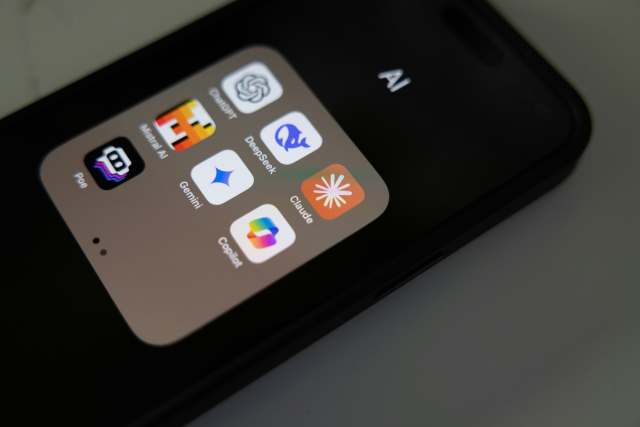
Picture this. You spend months building a content strategy around one AI platform. Your team learns its quirks, optimises for the way it surfaces answers, and quietly assumes it will always be there. Then, with barely any warning, a regulator on the other side of the world switches it off. That is close to what happened on 12 June 2026, when the United States government issued an export control directive that forced Anthropic to suspend access to two of its models, Fable 5 and Mythos 5, for every customer almost overnight.
Anthropic disagreed with the decision and described it as a misunderstanding, yet the lesson for businesses sits underneath that dispute. AI tools can be pulled at short notice by people you will never meet, for reasons you cannot influence. For Malaysian companies pouring time and budget into generative engine optimisation (GEO) and answer engine optimisation (AEO), that single event should prompt a hard question. What happens to your visibility if the model you have built around suddenly goes dark?
Why GEO and AEO now sit at the heart of visibility
Rather than scrolling a page of blue links, more people now ask an AI assistant a question and read whatever answer comes back. Generative engine optimisation and answer engine optimisation are how brands earn a place inside those answers. Get it right, and an assistant recommends your business when someone asks. Get it wrong, and you simply do not appear in the conversation. For many smaller brands, this shift has arrived faster than their marketing has had time to catch up, and the temptation is to pick whichever assistant feels most popular and pour everything into it.
Here is the catch. Each AI platform reads and ranks content in its own way, so a page that performs beautifully on one assistant might be overlooked by another. When a company optimises heavily for a single model, it is making a quiet bet that the model will stay available and keep playing by the same rules. The Fable and Mythos suspension shows how fragile that bet can be. The same pressures are already shaping AI regulation in Malaysia.
How real is the risk for Malaysia?
Malaysian businesses are still early in their AI journey, which makes this a good moment to build sensible habits. A study by Ecosystm with the Malaysian National AI Office found that only 21% of local SMEs have scaled AI across their organisation, while 36% are still piloting projects, as reported by BusinessToday. The same research flagged vendor lock-in as one of the barriers holding companies back, so the concern already sits on the radar of the people shaping national policy. Awareness, though, is not the same as readiness, and plenty of companies have yet to turn that concern into how they actually plan their content.
That early stage is an advantage. Few firms have locked themselves into a single tool, which means they can design for flexibility from the start. The risk of building around one provider tends to show up in a handful of practical ways:
- A model gets restricted or withdrawn, as Fable and Mythos were, and your optimised content loses its main shop window.
- A platform changes how it ranks or cites sources, and visibility you relied on quietly fades.
- Pricing or access terms shift, and a tool that sat at the centre of your plan becomes too costly or unavailable in your market.
None of these is far-fetched. Each has already happened somewhere across the AI industry in the past two years. Think of it the way you would think about a supplier. No sensible business would rely on a single factory in one country for every product it sells, because one shipping delay or one policy change could empty the shelves. Your AI visibility deserves the same caution, since the assistants that send customers your way are really suppliers of attention.
Spreading the risk without doubling the work
Protecting yourself does not mean optimising separately for every assistant on the planet. It means building content and visibility that travels well across platforms. A simple shift in habits goes a long way.
| Single-provider habit | Resilient alternative |
| Writing only for one assistant’s quirks | Creating clear, well-structured content any model can read |
| Tracking visibility on a single platform | Monitoring how several assistants cite your brand |
| Depending on one tool to create content | Keeping a backup workflow ready to switch to |
Strong fundamentals still carry most of the weight. Clear writing and accurate information tend to perform across every major assistant, because expertise is what they all reward in the end. Build for the reader first, and you become far less exposed when any platform changes its mind. This is the quiet strength behind durable AI search optimisation.
Where the Singapore-Malaysia bridge helps
Cross-border thinking earns its keep here. Impossible Marketing is based in Singapore and works as a bridge between Singaporean and Malaysian businesses, so we see how both markets respond to the same global shifts. Singapore’s SME adoption of AI has been climbing fast, and many of the lessons learned there about choosing tools carefully apply directly to companies in Kuala Lumpur and Penang. A retailer in Johor selling to shoppers on both sides of the border, for instance, cannot afford to have its products vanish from an assistant simply because one platform changed its terms in a single market.
Brands that operate on both sides of the Causeway have an extra reason to stay flexible, because a tool available in one market may face different rules in another. A strategy that leans on no single provider keeps campaigns steady wherever your customers happen to be searching.
Conclusion
The suspension of two AI models in a single afternoon was a useful reminder that nobody fully controls the tools they build upon. Malaysian businesses still have the freedom to design their digital visibility around flexibility rather than dependence, and the ones that do will handle the next surprise far more comfortably than those caught off guard.
If you want a brand that stays visible no matter which AI assistant your customers turn to, speak to the team at Impossible Marketing. We will help you build an approach that bridges Singapore and Malaysia and holds firm when the ground shifts beneath it.